Introduction:
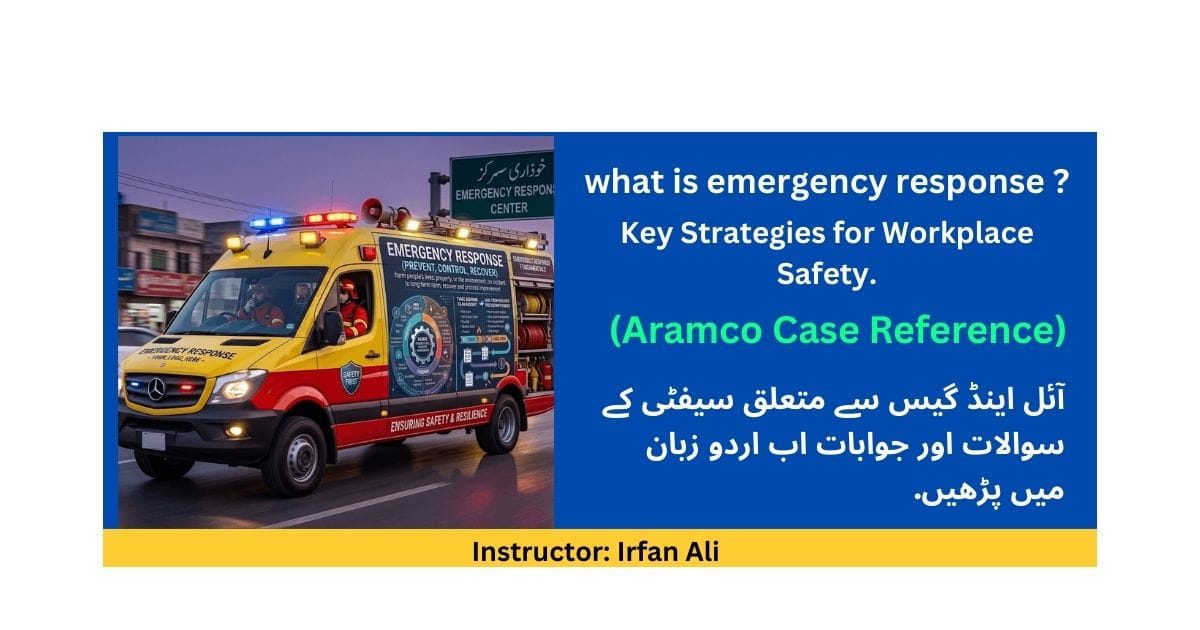
Understand what is emergency response and how it impacts workplace safety. Learn key strategies, procedures, and best practices to protect personnel and assets. Safety is not just a legal requirement, but also critical for employee health and seamless operations. Fires, chemical spills, and equipment malfunctions are all potential emergencies. Emergency response is a structured approach to dealing with such events that seeks to protect people, property, the environment, and the community while minimizing damages and assuring compliance
اردو ترجمہ
یہ سمجھیں کہ ایمرجنسی ریسپانس کیا ہے اور یہ کام کی جگہ کی حفاظت پر کس طرح اثر انداز ہوتا ہے۔ اہم حکمت عملی، طریقہ کار، اور بہترین عملی طریقے سیکھیں تاکہ عملے اور وسائل کی حفاظت کی جا سکے۔ حفاظت صرف قانونی تقاضا نہیں بلکہ کارکنوں کی صحت اور ہموار آپریشنز کے لیے بھی انتہائی اہم ہے۔ آگ، کیمیکل اسپِل، اور آلات کی خرابی ممکنہ ہنگامی حالات میں شامل ہیں۔ ایمرجنسی ریسپانس ایک منظم طریقہ کار ہے جو ایسے واقعات سے نمٹنے کے لیے اپنایا جاتا ہے، جس کا مقصد لوگوں، جائیداد، ماحول، اور کمیونٹی کی حفاظت کرنا، نقصانات کو کم کرنا، اور قوانین و ضوابط کی تعمیل کو یقینی بنانا ہے۔
Defining Emergency Response:
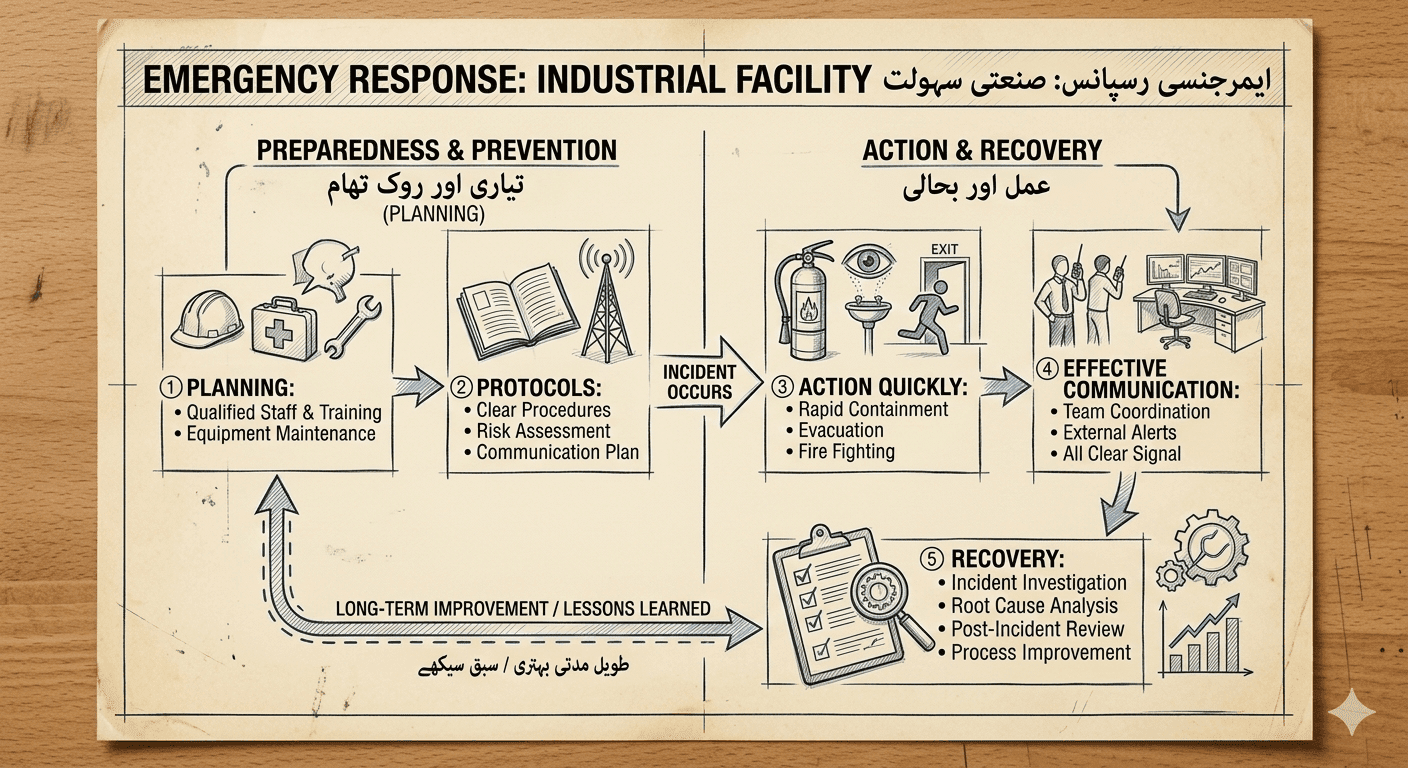
The term “emergency response” describes the organized and coordinated steps done to prevent, control, and recover from unexpected occurrences that harm people’s lives, property, or the environment. It includes a wide range of tasks, from quick response to an incident to long-term recover and process improvement. Emergency response is fundamentally about planning, acting quickly, and communicating effectively. This involves having qualified staff, the right tools, and well-defined protocols to deal with emergencies in industrial settings.
اردو ترجمہ
اصطلاح “ایمرجنسی ریسپانس” سے مراد وہ منظم اور مربوط اقدامات ہیں جو غیر متوقع واقعات کے اثرات کو روکنے، قابو پانے اور بحالی کے لیے کیے جاتے ہیں، جو لوگوں کی جان، املاک یا ماحول کو نقصان پہنچا سکتے ہیں۔ اس میں سرگرمیوں کی وسیع رینج شامل ہوتی ہے، جو کسی واقعے کے دوران فوری ردعمل سے لے کر طویل مدتی بحالی اور عمل میں بہتری تک محیط ہوتی ہے۔ بنیادی طور پر، ایمرجنسی ریسپانس کا تعلق منصوبہ بندی، فوری کارروائی، اور مؤثر رابطے سے ہے۔ اس کا مطلب ہے کہ صنعتی ماحول میں ایمرجنسی حالات کو سنبھالنے کے لیے اہل عملہ، مناسب آلات، اور واضح طور پر طے شدہ طریقہ کار موجود ہوں۔
Watch the video below to learn emergency response:
Common Kinds of Industrial Emergencies
Understanding what is emergency response requires knowing the types of emergencies that take action:
ایمرجنسی رسپانس کو سمجھنے کے لیے یہ جاننا ضروری ہے کہ وہ کون سی ایمرجنسیز ہیں جن پر فوری کارروائی کی جاتی ہے۔
1- Fire Emergencies:
Fires are frequently seen at manufacturing companies, chemical industries, and warehouses. They destroy human life and property. Quick leaving and firefighting efforts are required. Preparation and training help to reduce damage.
آگ کے واقعات اکثر مینوفیکچرنگ کمپنیوں، کیمیائی صنعتوں اور گوداموں میں دیکھے جاتے ہیں۔ یہ انسانی جان اور املاک کو نقصان پہنچاتے ہیں۔ فوری طور پر جگہ چھوڑنا اور آگ بجھانے کی کوششیں ضروری ہیں۔ تیاری اور تربیت نقصان کو کم کرنے میں مدد دیتی ہیں
2- Chemical Spills and Hazardous Materials:
Toxic substances can cause harm to both people and the environment. Proper containment and use of PPE are critical. Chemical dangers should be handled specifically in emergency response plans. This improves safety and prevents infections.
زہریلے مادے انسانوں اور ماحول دونوں کے لیے نقصان دہ ہو سکتے ہیں۔ مناسب کنٹینمنٹ اور ذاتی حفاظتی آلات (PPE) کا استعمال انتہائی اہم ہے۔ کیمیائی خطرات کو ایمرجنسی رسپانس پلان میں خاص طور پر ہینڈل کیا جانا چاہیے۔ یہ حفاظت کو بہتر بناتا ہے اور انفیکشن سے بچاتا ہے
3- Mechanical Failures:
Operations can be interrupted and personnel put in danger by equipment failures. Emergency shutdown measures assist reduce risk. Failures can be avoided with routine maintenance and inspections. Safety procedures save downtime and prevent accidents.
آلات کی خرابیوں کی وجہ سے آپریشنز رک سکتے ہیں اور عملے کے لیے خطرہ پیدا ہو سکتا ہے۔ ایمرجنسی شٹ ڈاؤن کے اقدامات خطرے کو کم کرنے میں مدد دیتے ہیں۔ باقاعدہ دیکھ بھال اور معائنہ کے ذریعے خرابیوں سے بچا جا سکتا ہے۔ حفاظتی طریقہ کار ڈاؤن ٹائم بچاتے ہیں اور حادثات کو روکتے ہیں۔
4- Natural Events:
Any industry can be impacted by storms, floods, or natural disasters. Location-specific preparedness and evacuation plans are necessary. Natural hazard scenarios should be included in emergency response plans. Employee safety and business continuity are preserved by appropriate training.
کسی بھی صنعت پر طوفان، سیلاب یا قدرتی آفات کا اثر پڑ سکتا ہے۔ مقام کے مطابق تیاری اور انخلا کے منصوبے ضروری ہیں۔ ایمرجنسی رسپانس پلان میں قدرتی خطرات کے منظرنامے شامل ہونے چاہئیں۔ مناسب تربیت کے ذریعے ملازمین کی حفاظت اور کاروباری تسلسل کو برقرار رکھا جاتا ہے
5- Medical Emergencies:
First aid and medical attention must be provided right away in the event of an unexpected illness or injury. First aid items and trained staff should always be on hand. Fatalities and the severity of injuries are decreased by prompt action. Medical contacts and procedures should be specified in emergency plans.
اچانک بیماری یا چوٹ کی صورت میں فوری طور پر فرسٹ ایڈ اور طبی امداد فراہم کرنا ضروری ہے۔ فرسٹ ایڈ کا سامان اور تربیت یافتہ عملہ ہمیشہ دستیاب ہونا چاہیے۔ فوری کارروائی سے اموات اور چوٹوں کی شدت کم کی جا سکتی ہے۔ ایمرجنسی پلان میں طبی رابطے اور اقدامات کی وضاحت ہونی چاہیے
The Best Ways for Industries to Implement Emergency Response:
To increase workplace safety, industry professionals should follow the following practices:
کام کی جگہ کو زیادہ محفوظ بنانے کے لیے صنعتی ماہرین کو درج ذیل اقدامات اختیار کرنے چاہئیں۔
1- Develop a Written Emergency Response Plan (ERP):
A documented Emergency Response Plan clearly describes the steps to take during various emergencies. It defines the roles, duties, and communication protocols for staff. This strategy helps to ensure that everyone understands what steps to take during an incident. A well-documented ERP enhances coordination and decreases confusion during an emergency.
ایک تحریری ایمرجنسی رسپانس پلان مختلف ہنگامی حالات میں اختیار کیے جانے والے اقدامات کو واضح طور پر بیان کرتا ہے۔ یہ عملے کے کردار، ذمہ داریوں اور رابطے کے طریقۂ کار کی وضاحت کرتا ہے۔ یہ حکمتِ عملی اس بات کو یقینی بنانے میں مدد دیتی ہے کہ کسی بھی حادثے کے وقت ہر شخص کو معلوم ہو کہ اسے کیا اقدامات کرنے ہیں۔ ایک اچھی طرح سے دستاویزی ERP ہنگامی صورتحال میں بہتر ہم آہنگی پیدا کرتا ہے اور الجھن کو کم کرتا ہے۔
2- Regularly Update the Plan:
Emergency response plans should be evaluated and updated on a regular basis. Changes in operations, equipment, or new risks may need revisions to processes. Regular modifications ensure the plan’s relevance and effectiveness. Keeping the ERP up to date helps firms prepare for emerging hazards.
ایمرجنسی رسپانس پلان کا باقاعدگی سے جائزہ لیا جانا اور اسے اپ ڈیٹ کیا جانا چاہیے۔ آپریشنز، آلات یا نئے خطرات میں تبدیلی کی صورت میں طریقۂ کار میں ترمیم کی ضرورت پڑ سکتی ہے۔ باقاعدہ تبدیلیاں اس بات کو یقینی بناتی ہیں کہ منصوبہ مؤثر اور متعلقہ رہے۔ ERP کو اپ ٹو ڈیٹ رکھنے سے ادارے نئے اور ابھرتے ہوئے خطرات کے لیے بہتر طور پر تیار رہتے ہیں۔
3- Conduct Training and Simulations:
Employees should receive regular training on emergency procedures. Mock drills and simulations help workers practice how to respond during real incidents. These exercises improve confidence and response time. Regular training ensures employees can react quickly and safely in emergencies.
ملازمین کو ایمرجنسی طریقۂ کار کے بارے میں باقاعدہ تربیت دی جانی چاہیے۔ فرضی مشقیں اور ڈرلز کارکنوں کو یہ سیکھنے میں مدد دیتی ہیں کہ حقیقی حادثات کے دوران کیسے ردِعمل دینا ہے۔ یہ مشقیں اعتماد اور ردِعمل کی رفتار کو بہتر بناتی ہیں۔ باقاعدہ تربیت اس بات کو یقینی بناتی ہے کہ ملازمین ہنگامی حالات میں تیزی اور محفوظ طریقے سے ردِعمل دے سکیں۔
4- Invest in Safety Equipment:
Proper safety equipment is required for an efficient emergency response. Fire extinguishers, first-aid kits, sirens, and other items must be present and operational. Regular checks ensure that equipment is operational when needed. Having dependable safety equipment reduces injuries and damage during mishaps.
موثر ایمرجنسی رسپانس کے لیے مناسب حفاظتی آلات کا ہونا ضروری ہے۔ فائر ایکسٹنگوشرز، فرسٹ ایڈ کٹس، سائرن اور دیگر ضروری سامان موجود اور قابلِ استعمال ہونا چاہیے۔ باقاعدہ جانچ اس بات کو یقینی بناتی ہے کہ ضرورت کے وقت یہ آلات صحیح طور پر کام کریں۔ قابلِ اعتماد حفاظتی آلات حادثات کے دوران چوٹوں اور نقصان کو کم کرنے میں مدد دیتے ہیں۔
5- Coordinate with Local Authorities:
Organizations should maintain close touch with local emergency services. Collaboration with fire departments, medical teams, and rescue agencies provides a faster response to incidents. Sharing knowledge about the facility and potential threats increases preparedness. This collaboration improves overall emergency management.
اداروں کو مقامی ایمرجنسی سروسز کے ساتھ قریبی رابطہ برقرار رکھنا چاہیے۔ فائر بریگیڈ، طبی ٹیموں اور ریسکیو ایجنسیوں کے ساتھ تعاون حادثات کے دوران فوری ردِعمل کو ممکن بناتا ہے۔ فیسلٹی اور ممکنہ خطرات کے بارے میں معلومات کا اشتراک تیاری کو بہتر بناتا ہے۔ یہ تعاون مجموعی ایمرجنسی مینجمنٹ کو مضبوط کرتا ہے۔
6- Continuous Monitoring:
Continuous monitoring systems can help spot potential problems early on. Sensors, alarms, and surveillance systems generate real-time notifications. Early detection enables businesses to respond quickly before crises worsen. Monitoring systems promote safety and contribute to the prevention of significant incidents.
مسلسل نگرانی کے نظام ممکنہ مسائل کو وقت سے پہلے شناخت کرنے میں مدد دے سکتے ہیں۔ سینسرز، الارمز، اور نگرانی کے نظام حقیقی وقت میں اطلاعات فراہم کرتے ہیں۔ بروقت شناخت کاروباری اداروں کو یہ موقع دیتی ہے کہ وہ بحران کے بڑھنے سے پہلے فوری اقدامات کر سکیں۔ نگرانی کے نظام حفاظت کو فروغ دیتے ہیں اور بڑے حادثات کی روک تھام میں معاون ہوتے ہیں۔
Importance of Emergency Response in Industry:
Industries are particularly vulnerable to risks that can include heavy machinery accidents and chemical exposure. It is impossible to exaggerate the importance of having a strong emergency response system:
اردو ترجمہ
صنعتوں کو مختلف قسم کے مخصوص خطرات کا سامنا ہوتا ہے، جو بھاری مشینری کے حادثات سے لے کر کیمیکل کے اثرات تک ہو سکتے ہیں۔ اس لیے ایک مضبوط ایمرجنسی ریسپانس سسٹم کی اہمیت کو کسی بھی صورت میں کم نہیں سمجھا جا سکتا۔
1_Protecting Human Life:
Safety and welfare of workers is the main objective. Responding quickly and effectively saves lives.
ملازمین کی حفاظت اور ان کی فلاح و بہبود بنیادی مقصد ہے۔ تیزی اور مؤثر طریقے سے ردِعمل دینا جانیں بچانے میں مدد دیتا ہے۔
2-Minimizing Financial Loss:
Emergencies frequently result in property damage, operational problems, or legal obligations. A well-thought-out solution reduces these expenses
ایمرجنسی حالات اکثر املاک کو نقصان، آپریشنل مسائل یا قانونی ذمہ داریوں کا سبب بنتے ہیں۔ ایک اچھی طرح سوچا سمجھا اور تیار شدہ حل ان اخراجات کو کم کرنے میں مدد دیتا ہے۔
3-Regulatory Compliance:
Emergency response plans (ERPs) must be recorded according to regulations and industry standards. Compliance helps to avoid fines while also ensuring business continuation
قوانین اور صنعتی معیارات کے مطابق ایمرجنسی ریسپانس پلانز (ERP) کو باقاعدہ طور پر دستاویزی شکل میں ہونا ضروری ہے۔ ان قوانین کی پابندی جرمانوں سے بچنے میں مدد دیتی ہے اور ساتھ ہی کاروبار کے تسلسل کو بھی یقینی بناتی ہے
4-Maintaining Reputation:
Companies that handle emergencies successfully keep trust with their employees, customers, and partners.
وہ کمپنیاں جو ایمرجنسی حالات کو مؤثر طریقے سے سنبھالتی ہیں، اپنے ملازمین، صارفین اور شراکت داروں کے درمیان اعتماد برقرار رکھتی ہیں۔
basic components of a Successful Emergency Response Strategy
It is necessary to understand the fundamental components of emergency response. Included in a well-organized plan should be the following:
ایمرجنسی ریسپانس کے بنیادی اجزاء کو سمجھنا ضروری ہے۔ ایک اچھی طرح منظم منصوبے میں درج ذیل عناصر شامل ہونے چاہئیں
1_ Risk Assessment
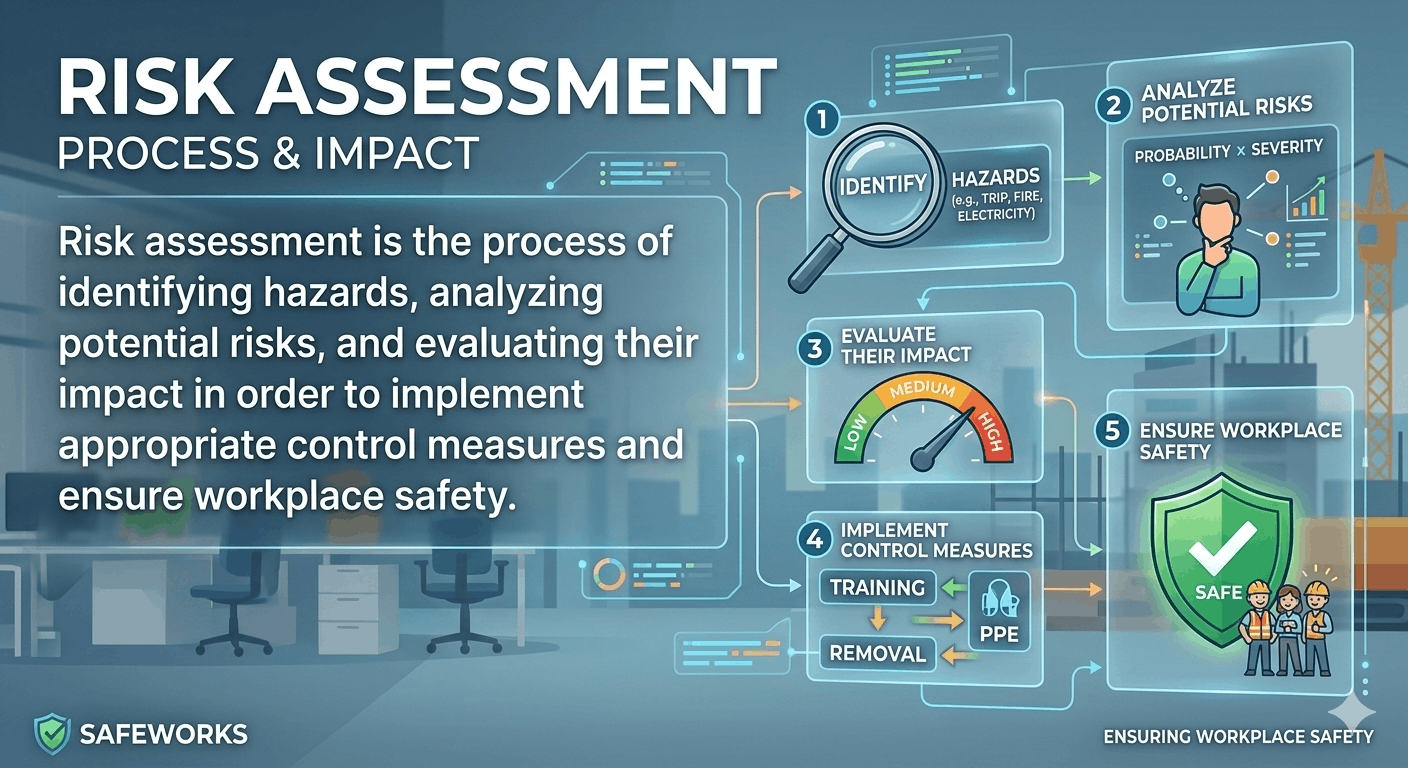
Finding possible risks at work is the first step in a thorough emergency response. Analyzing the possibility of occurrences and their possible effects on staff and operations is part of risk assessment.
کام کی جگہ پر ممکنہ خطرات کی نشاندہی کرنا ایک جامع ایمرجنسی ریسپانس کا پہلا قدم ہوتا ہے۔ رسک اسیسمنٹ میں ممکنہ واقعات کے امکانات اور ان کے عملے اور آپریشنز پر ممکنہ اثرات کا تجزیہ شامل ہوتا ہے۔
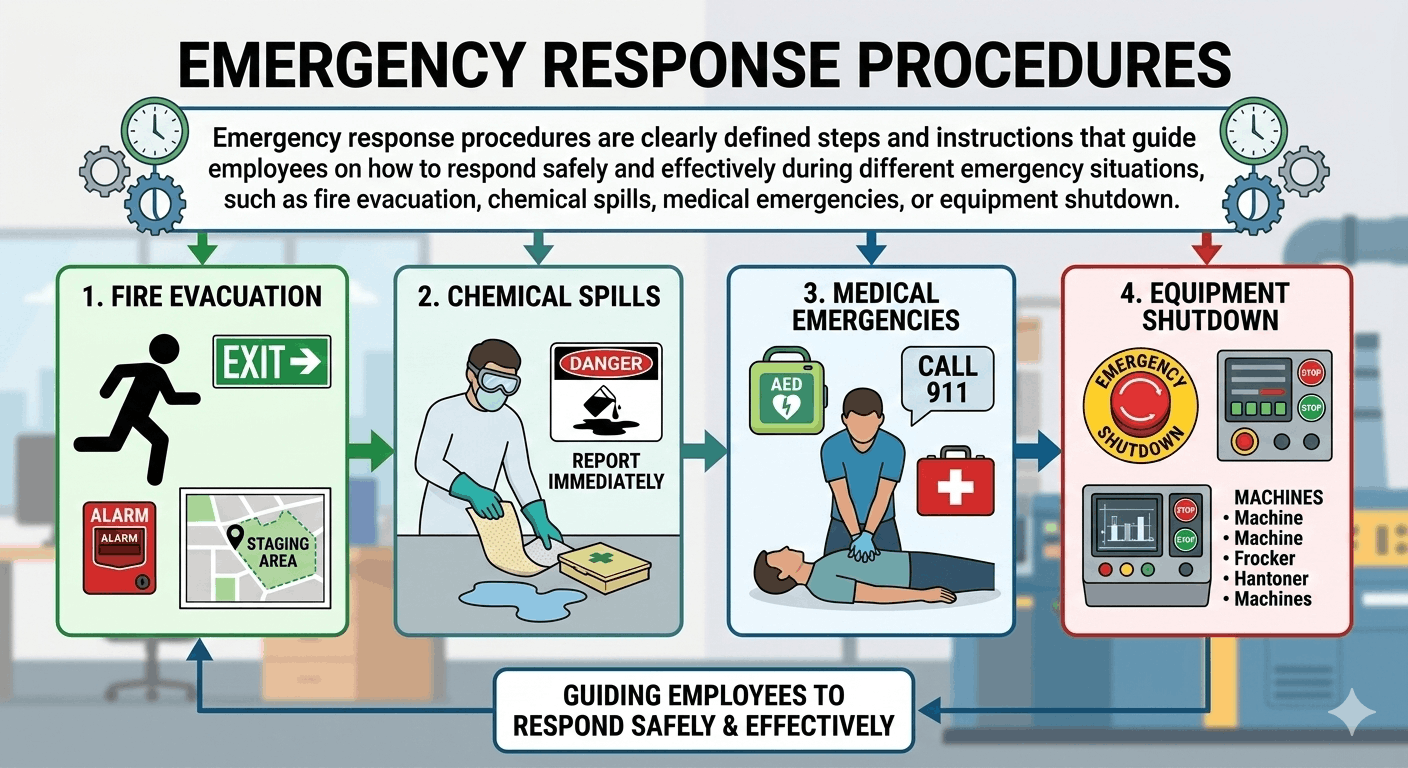
2_ Emergency Response Procedures
The exact actions to follow in various emergency situations are outlined in procedures. Examples consist of:
مختلف ہنگامی حالات میں اختیار کیے جانے والے درست اقدامات طریقہ کار (Procedures) میں واضح طور پر بیان کیے جاتے ہیں۔ مثالوں میں شامل ہیں:
- Fire evacuation protocols
- Chemical spill containment
- First aid and medical response
- Equipment shutdown processes
3_ Communication Strategy
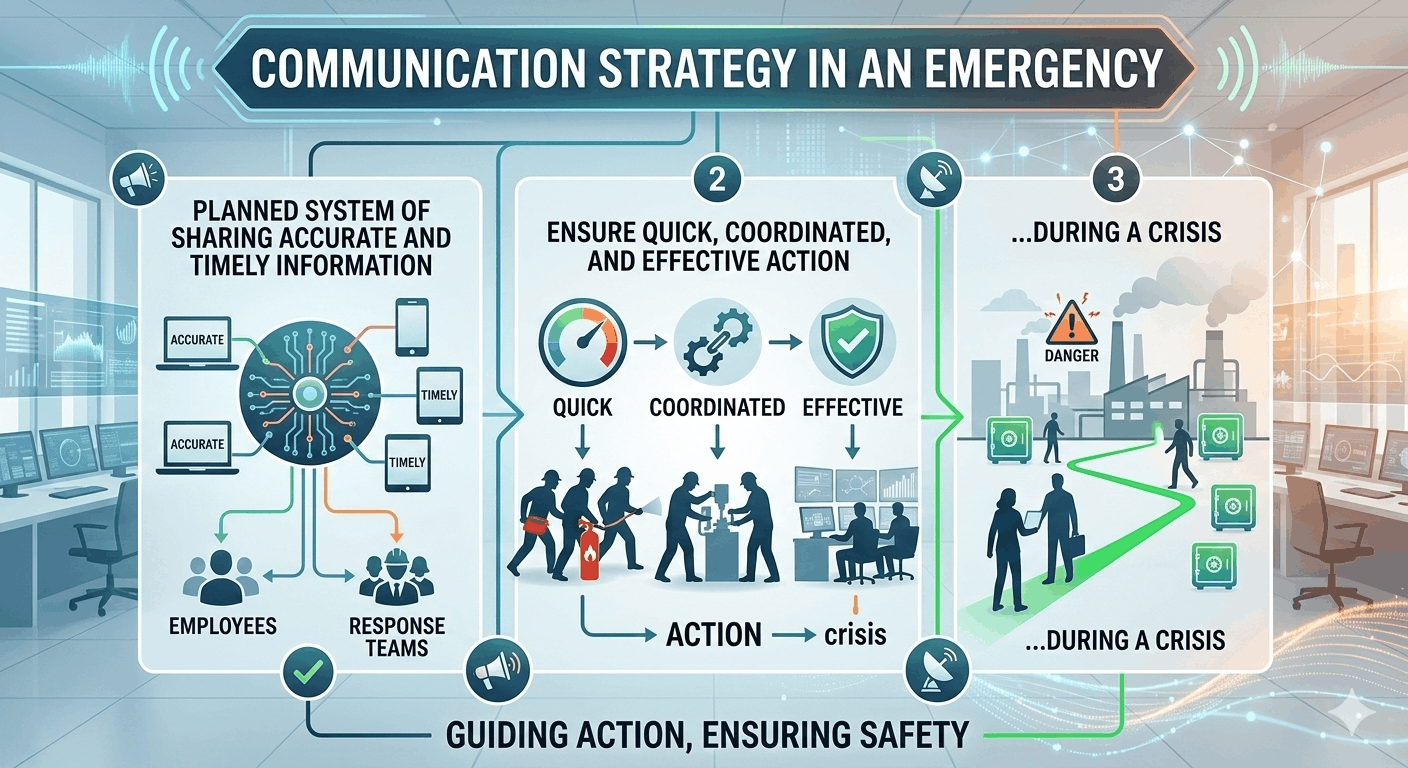
In an emergency, effective communication is essential. This involves:
ایمرجنسی کے دوران مؤثر رابطہ نہایت ضروری ہوتا ہے۔ اس میں درج ذیل چیزیں شامل ہوتی ہیں:
- Alert systems (alarms, sirens, notifications)
- Internal communication channels
- External coordination with local emergency services
4_ Positions and Duties
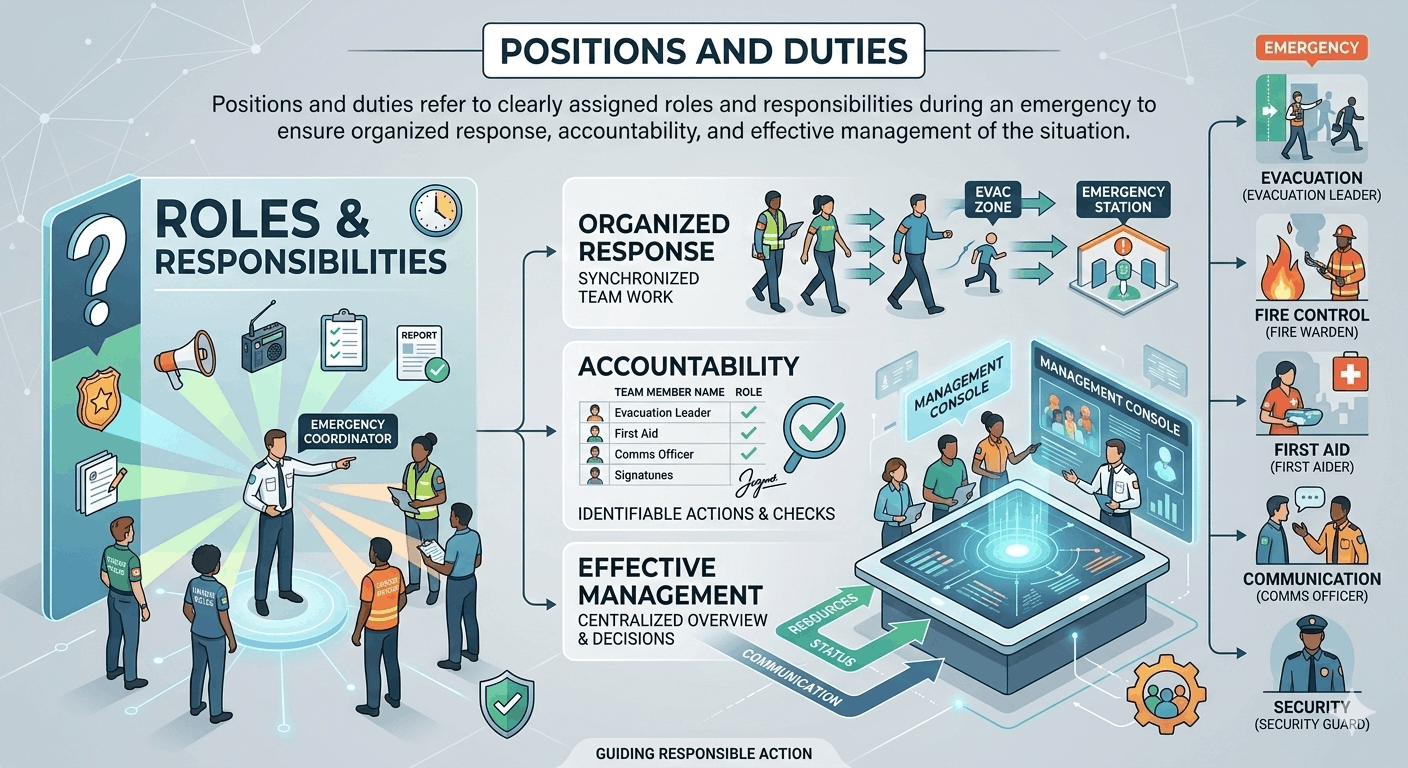
Accountability is ensured by clearly defining duties. Typical positions consist of:
واضح ذمہ داریاں مقرر کرنے سے جوابدہی کو یقینی بنایا جاتا ہے۔ عام طور پر درج ذیل کردار شامل ہوتے ہیں
- Emergency Coordinator
- First Responders
- Safety Officers
- Floor Wardens
5_ Training and Drills
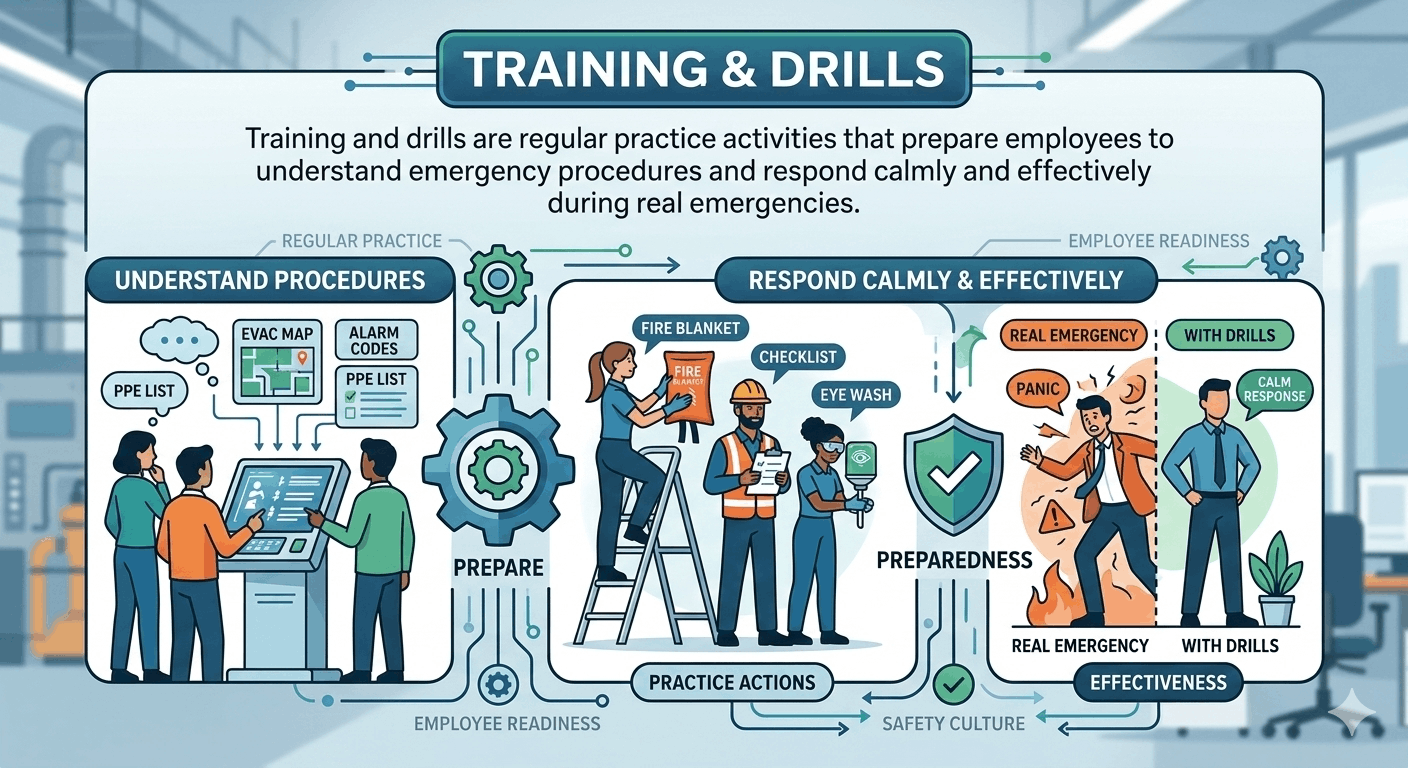
Employees who participate in regular training sessions and mock emergency drills are better able to understand protocols and feel less nervous during actual emergencies.
وہ ملازمین جو باقاعدگی سے تربیتی سیشنز اور فرضی ایمرجنسی مشقوں (ڈرلز) میں حصہ لیتے ہیں، طریقہ کار کو بہتر طور پر سمجھتے ہیں اور حقیقی ایمرجنسی کی صورتحال میں کم گھبراہٹ محسوس کرتے ہیں۔
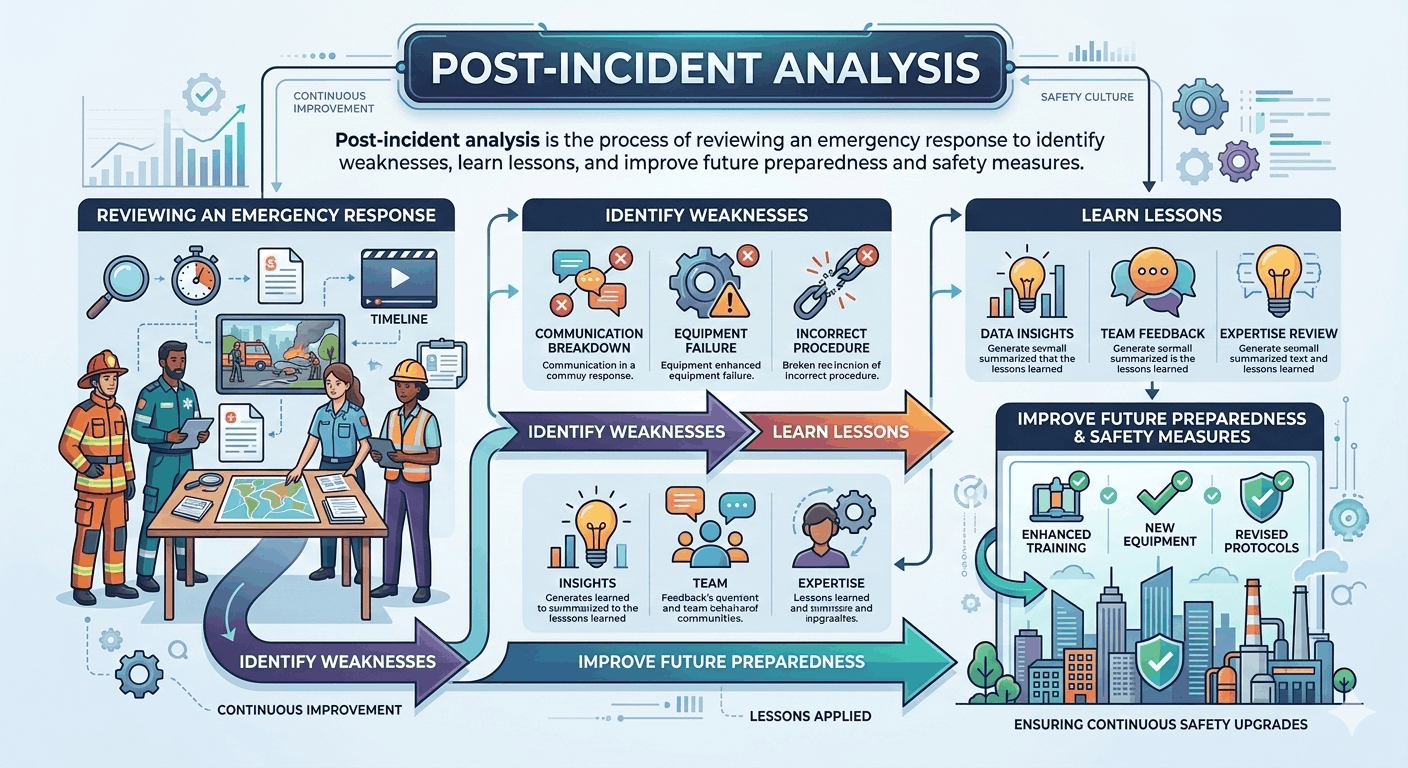
6. Post-Incident Analysis
Analyzing the reaction to an emergency might help find weaknesses and improve future awareness. For continual improvement, incident and lesson-learning documentation is essential.
ایمرجنسی کے دوران کیے گئے ردِعمل کا تجزیہ کرنے سے کمزوریوں کی نشاندہی ہوتی ہے اور مستقبل میں آگاہی اور تیاری کو بہتر بنانے میں مدد ملتی ہے۔ مسلسل بہتری کے لیے واقعات اور حاصل ہونے والے اسباق کی دستاویزات تیار کرنا ضروری ہوتا ہے۔
The Incident Command System (ICS): Structured Response
The framework of the Incident Command System (ICS) frequently provides industry professionals with an answer to the question of what constitutes emergency response. ICS, which was first created to combat wildfires, is currently the industry standard for managing industrial incidents.ICS offers a modular hierarchy that can grow or shrink according to the incident’s significance. The response is separated into five primary functions:
انسڈینٹ کمانڈ سسٹم (ICS) کا فریم ورک اکثر صنعتی ماہرین کو یہ جواب فراہم کرتا ہے کہ ایمرجنسی ریسپانس کیا ہوتا ہے۔ ICS، جسے سب سے پہلے جنگلات کی آگ پر قابو پانے کے لیے تیار کیا گیا تھا، فی الحال صنعتی واقعات کے انتظام کے لیے معیاری طریقہ کار ہے۔ ICS ایک ماڈیولر ہائیرارکی فراہم کرتا ہے جو واقعے کی اہمیت کے مطابق بڑھ یا گھٹ سکتی ہے۔ ریسپانس کو پانچ بنیادی افعال میں تقسیم کیا گیا ہے
1- Command
Command is the most critical role of ICS since it directs the emergency response. The Incident Commander manages the entire situation and directs the reaction. The command team determines objectives, priorities, and safety measures. It guarantees that all teams follow a comprehensive strategy. The goal is to manage the emergency in an orderly and efficient manner.
کمانڈ ICS کا سب سے اہم کردار ہے کیونکہ یہ ایمرجنسی ریسپانس کی رہنمائی کرتا ہے۔ انسڈینٹ کمانڈر پورے حالات کا انتظام کرتا ہے اور ردعمل کی سمت متعین کرتا ہے۔ کمانڈ ٹیم مقاصد، ترجیحات، اور حفاظتی اقدامات کا تعین کرتی ہے۔ یہ یقینی بناتی ہے کہ تمام ٹیمیں ایک جامع حکمت عملی کے مطابق کام کریں۔ مقصد ایمرجنسی کو منظم اور مؤثر طریقے سے سنبھالنا ہے۔
2- Operations
The Operations Section oversees the practical and field actions of the emergency response. This team’s mission is to keep the incident under control and reduce dangers. Its functions include rescue, firefighting, evacuation, and medical response. The Operations team carries out the objectives stated by the Incident Commander. Its goal is to bring the situation under control quickly and safely.
آپریشنز سیکشن ایمرجنسی ریسپانس کی عملی اور فیلڈ سرگرمیوں کی نگرانی کرتا ہے۔ اس ٹیم کا مقصد واقعے کو کنٹرول میں رکھنا اور خطرات کو کم کرنا ہے۔ اس کے افعال میں ریسکیو، فائرفائٹنگ، ایویکیوشن، اور طبی مدد شامل ہیں۔ آپریشنز ٹیم انسڈینٹ کمانڈر کی مقرر کردہ اہداف کو عملی جامہ پہناتی ہے۔ اس کا مقصد صورتحال کو جلد اور محفوظ طریقے سے قابو میں لانا ہے۔
3- Planning
The Planning Section gathers and analyzes data during an occurrence. It monitors available resources and develops an Incident Action Plan (IAP) for future actions. The Planning team also creates situational reports. This improves decision-making accuracy and organization. The role of planning is to ensure that the response is planned and coordinated.
پلاننگ سیکشن واقعے کے دوران معلومات جمع اور تجزیہ کرتا ہے۔ یہ دستیاب وسائل کی نگرانی کرتا ہے اور مستقبل کے اقدامات کے لیے انسڈینٹ ایکشن پلان (IAP) تیار کرتا ہے۔ پلاننگ ٹیم صورتحال کی رپورٹس بھی تیار کرتی ہے۔ اس سے فیصلہ سازی زیادہ درست اور منظم ہو جاتی ہے۔ پلاننگ کا کردار یہ یقینی بنانا ہے کہ ریسپانس منظم اور ہم آہنگ ہو۔
4- Logistics
The Logistics Section offers resources and assistance to reaction teams. It organizes equipment, tools, communication systems, and transportation. It also offers food, medical care, and other essential services. Logistics ensures that responders have everything they need to perform their duties. Its objective is to ensure that operations run smoothly and efficiently.
لاجسٹکس سیکشن ریسپانس ٹیموں کو وسائل اور معاونت فراہم کرتا ہے۔ یہ سامان، اوزار، مواصلاتی نظام، اور نقل و حمل کا انتظام کرتا ہے۔ یہ خوراک، طبی دیکھ بھال، اور دیگر ضروری خدمات بھی فراہم کرتا ہے۔ لاجسٹکس اس بات کو یقینی بناتا ہے کہ ریسپانڈرز کے پاس اپنے فرائض انجام دینے کے لیے سب کچھ موجود ہو۔ اس کا مقصد یہ ہے کہ آپریشنز ہموار اور مؤثر طریقے سے چلیں۔
5- Finance / Administration
The emergency response’s financial and administrative issues are managed by the Finance/Administration Section. It keeps track of the costs and expenses incurred during the event. This covers contract management, compensation claims, and procurement. It also keeps track of financial reports and documentation. Its goal is to maintain transparency and control over the response’s financial management.
ایمرجنسی ریسپانس کے مالی اور انتظامی امور فنانس/ایڈمنسٹریشن سیکشن کے ذریعے سنبھالے جاتے ہیں۔ یہ واقعے کے دوران ہونے والے اخراجات اور لاگت کا ریکارڈ رکھتا ہے۔ اس میں معاہدوں کا انتظام، معاوضے کے دعوے، اور خریداری شامل ہیں۔ یہ مالی رپورٹس اور دستاویزات کا بھی ریکارڈ رکھتا ہے۔ اس کا مقصد ریسپانس کے مالی انتظام میں شفافیت اور کنٹرول برقرار رکھنا ہے۔
Emergency Response and Technology
Technology is used by modern business environment to improve emergency response
جدید کاروباری ماحول میں ایمرجنسی ریسپانس کو بہتر بنانے کے لیے ٹیکنالوجی استعمال کی جاتی ہے
1- IoT Devices and Sensors
IoT devices and sensors detect potential threats like as gas leaks, fires, and equipment faults instantly. They send real-time alerts to the emergency response team. This early detection prevents escalation and protects people and property.
آئی او ٹی ڈیوائسز اور سینسر ممکنہ خطرات جیسے گیس لیک، آگ، اور آلات کی خرابی کو فوراً شناخت کرتے ہیں۔ یہ ایمرجنسی ریسپانس ٹیم کو حقیقی وقت میں اطلاعات بھیجتے ہیں۔ اس بروقت شناخت سے خطرے کے بڑھنے سے بچاؤ ہوتا ہے اور لوگوں اور جائیداد کی حفاظت کی جاتی ہے
2- Emergency Apps and Notifications
Employees and management are immediately notified of an issue using emergency applications and notification systems. They issue important instructions and updates to ensure safety. Real-time communication allows teams to respond swiftly and efficiently.
ایمرجنسی ایپلیکیشنز اور نوٹیفیکیشن سسٹمز کے ذریعے ملازمین اور انتظامیہ کو مسئلے کی فوری اطلاع دی جاتی ہے۔ یہ حفاظتی اقدامات کو یقینی بنانے کے لیے اہم ہدایات اور تازہ ترین معلومات جاری کرتے ہیں۔ حقیقی وقت کی مواصلات ٹیموں کو تیزی اور مؤثر طریقے سے ردعمل دینے کی اجازت دیتی ہے۔
3- Drones and Robotics
Drones and robotics are utilized in high-risk environments where human access is hazardous. They survey, supervise, and provide safe assistance during emergency operations. Their utilization decreases personnel risk while also speeding up incident management.
ڈرونز اور روبوٹکس کو ایسے ہائی رسک ماحول میں استعمال کیا جاتا ہے جہاں انسانی رسائی خطرناک ہو۔ یہ ایمرجنسی آپریشنز کے دوران سروے کرتے ہیں، نگرانی کرتے ہیں، اور محفوظ مدد فراہم کرتے ہیں۔ ان کے استعمال سے عملے کے خطرات کم ہوتے ہیں اور واقعے کے انتظام کی رفتار بھی بڑھ جاتی ہے
4- Data Analytics
Data analytics assesses post-incident data to discover flaws and enhance response strategies. It assists organizations in refining their Emergency Response Plans (ERPs). Continuous analysis mitigates future hazards and improves overall preparedness.
ڈیٹا اینالیٹکس واقعے کے بعد کے ڈیٹا کا تجزیہ کرتا ہے تاکہ خامیوں کو دریافت کیا جا سکے اور ریسپانس کی حکمت عملیوں کو بہتر بنایا جا سکے۔ یہ تنظیموں کو ان کے ایمرجنسی ریسپانس پلانز (ERP) کو بہتر بنانے میں مدد دیتا ہے۔ مسلسل تجزیہ مستقبل کے خطرات کو کم کرتا ہے اور مجموعی تیاری کو بہتر بناتا ہے
Organizations that integrate technology can respond faster, make more informed decisions, and efficiently safeguard employee safety
وہ تنظیمیں جو ٹیکنالوجی کو شامل کرتی ہیں، تیزی سے ردعمل دے سکتی ہیں، زیادہ باخبر فیصلے کر سکتی ہیں، اور مؤثر طریقے سے ملازمین کی حفاظت کو یقینی بنا سکتی ہیں۔
Conclusion
To summarize, understanding emergency response is critical for any industry professional dedicated to workplace safety. A robust emergency response plan not only saves lives, but it also ensures operational continuity, avoids financial damage, and complies with legal requirements.
خلاصہ یہ کہ، ایمرجنسی ریسپانس کو سمجھنا کسی بھی صنعتی پیشہ ور کے لیے نہایت اہم ہے جو کام کی جگہ کی حفاظت کے لیے پرعزم ہو۔ ایک مضبوط ایمرجنسی ریسپانس پلان نہ صرف جانیں بچاتا ہے بلکہ آپریشنل تسلسل کو بھی یقینی بناتا ہے، مالی نقصان سے بچاتا ہے، اور قانونی تقاضوں کی تعمیل کرتا ہے