Introduction
What is a Confined Space? This is a critical question for industry professionals to grasp in order to ensure workplace safety. A confined space is a place with restricted access that may contain hazardous circumstances. These spaces are widespread in industries such as manufacturing, construction, oil & gas, and water treatment. Workers frequently access these areas for inspection or maintenance, but good safety practices are critical to avoiding major mishaps.
اردو ترجمہ
کنفائنڈ اسپیس کیا ہے؟ یہ ایک اہم سوال ہے جسے صنعتی شعبے سے وابستہ پیشہ ور افراد کو کام کی جگہ کی حفاظت یقینی بنانے کے لیے سمجھنا ضروری ہے۔ کنفائنڈ اسپیس ایسی جگہ ہوتی ہے جہاں رسائی محدود ہو اور جہاں خطرناک حالات موجود ہو سکتے ہیں۔ ایسی جگہیں عام طور پر صنعتوں جیسے مینوفیکچرنگ، تعمیرات، آئل اینڈ گیس، اور واٹر ٹریٹمنٹ میں پائی جاتی ہیں۔ کارکن اکثر ان جگہوں میں معائنہ یا دیکھ بھال کے لیے داخل ہوتے ہیں، لیکن بڑے حادثات سے بچنے کے لیے مناسب حفاظتی طریقہ کار پر عمل کرنا بہت ضروری ہے۔
Definition of Confined Space
OSHA (Occupational Safety and Health Administration) and other international safety authorities describe a restricted area as one that fits all three of the following criteria:
OSHA (آکوپیشنل سیفٹی اینڈ ہیلتھ ایڈمنسٹریشن) اور دیگر بین الاقوامی حفاظتی ادارے کنفائنڈ یا محدود جگہ کو ایسی جگہ قرار دیتے ہیں جو درج ذیل تینوں شرائط پر پوری اترتی ہو:
1- Limited or restricted means of entry and exit
The area is not made to be easily accessible. It may be necessary to climb, crawl, or use specific equipment to enter and depart. Tanks, silos, vaults, pits, manholes, tunnels, and pipelines are a few examples.
یہ جگہ آسانی سے رسائی کے لیے تیار نہیں کی گئی ہوتی۔ اس میں داخل ہونے اور باہر نکلنے کے لیے چڑھنا، رینگنا، یا مخصوص آلات استعمال کرنا پڑ سکتا ہے۔ ٹینکس، سائلوز، والٹس، گڑھے، مین ہولز، سرنگیں، اور پائپ لائنیں اس کی چند مثالیں ہیں۔
2- Not intended for continuous human occupancy
The area is not intended for habitation or regular employment, but rather for short-term tasks, repairs, inspection, or cleaning.
یہ جگہ رہائش یا مستقل کام کے لیے نہیں ہوتی بلکہ عارضی کاموں، مرمت، معائنہ، یا صفائی کے لیے استعمال کی جاتی ہے۔
3- Sufficient Size for Worker Access and Operations
The restricted space must be spacious enough that a worker may safely enter, navigate, and efficiently execute inspection, maintenance, cleaning, or repair duties.
محدود جگہ اتنی وسیع ہونی چاہیے کہ کارکن محفوظ طور پر داخل ہو سکے، حرکت کر سکے، اور معائنہ، دیکھ بھال، صفائی، یا مرمت کے کام مؤثر طریقے سے انجام دے سکے۔
If a space fits these three criteria, it is legally designated as a confined space and must be managed in accordance with strict safety procedures.
اگر کوئی جگہ ان تینوں معیاروں پر پورا اترتی ہے تو اسے قانونی طور پر کنفائنڈ اسپیس قرار دیا جاتا ہے اور اسے سخت حفاظتی طریقہ کار کے مطابق منظم کیا جانا ضروری ہوتا ہے۔
Examples of Confined Spaces
- Storage tanks
- Silos and hoppers
- Boilers
- Pipelines and ducts
- Underground tunnels
- Sewers and drainage systems
- Utility vaults
- Chemical reaction vessels
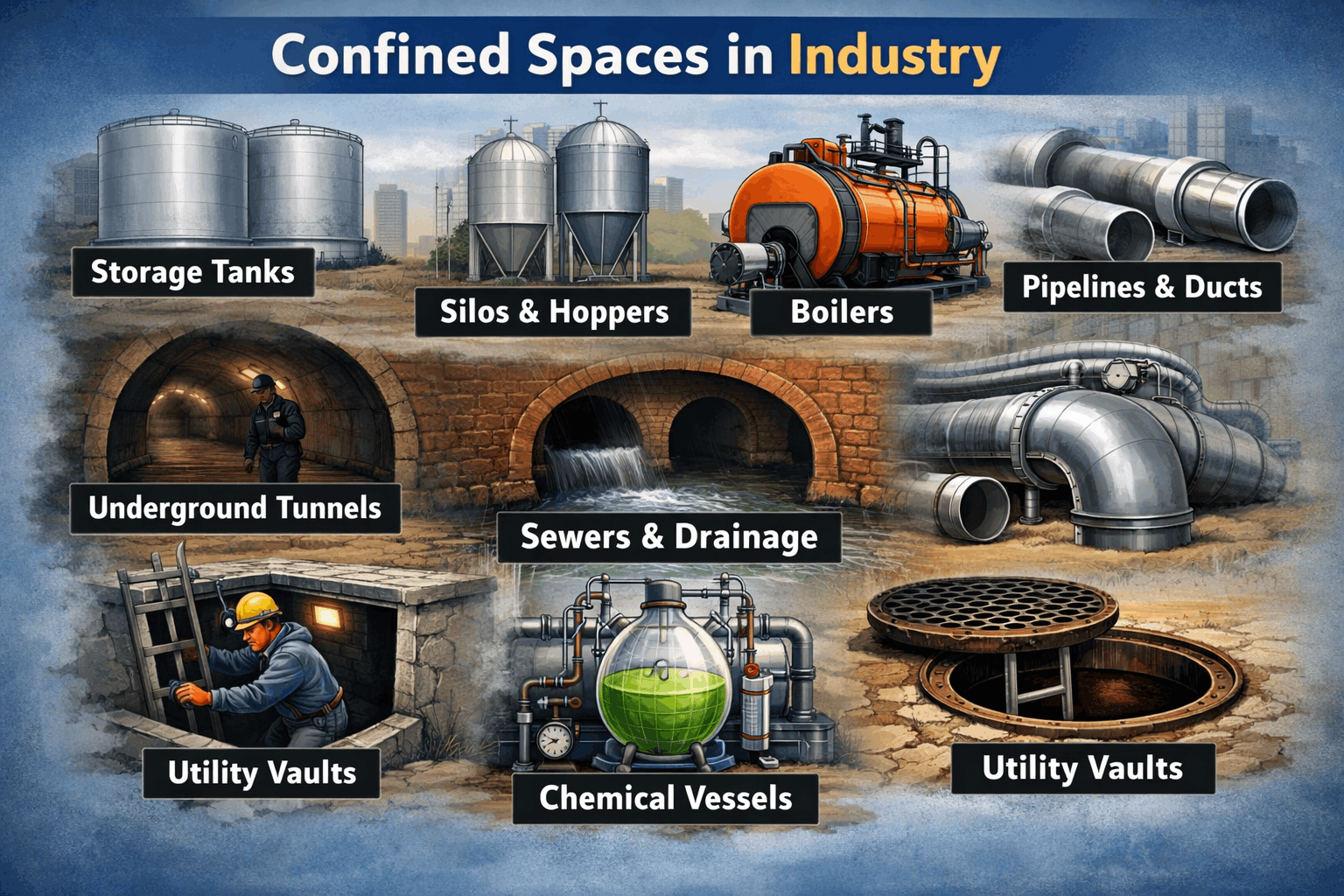
Although these locations may appear harmless from the outside, conditions inside them can change rapidly. For this reason, it’s important to understand what a confined space is. is an essential part of any program for workplace safety.
اگرچہ یہ جگہیں باہر سے دیکھنے میں محفوظ یا بے ضرر لگ سکتی ہیں، لیکن ان کے اندر کے حالات بہت تیزی سے تبدیل ہو سکتے ہیں۔ اسی وجہ سے کنفائنڈ اسپیس کیا ہے اس کو سمجھنا کسی بھی ورک پلیس سیفٹی پروگرام کا ایک اہم حصہ ہے۔
Types of Confined Spaces
Confined spaces are broadly divided into two main categories based on the level of risk they present:
1. Non-Permit Confined Space
A confined area without any real or potential risks that could result in death or severe bodily injury is known as a non-permit confined space. To put it another way, even though it fits the definition of a confined area, it has been assessed and determined to be safe to enter without any extra safety measures.
ایک ایسا محدود علاقہ جس میں کوئی حقیقی یا ممکنہ خطرات نہ ہوں جو جان یا شدید جسمانی نقصان کا سبب بن سکتے ہوں، اسے نان پرمٹ کنفائنڈ اسپیس (Non-Permit Confined Space) کہا جاتا ہے۔ دوسرے الفاظ میں، اگرچہ یہ تعریف کے لحاظ سے ایک محدود جگہ کے زمرے میں آتا ہے، لیکن اس کا جائزہ لینے کے بعد یہ طے کیا گیا ہے کہ اس میں داخل ہونا اضافی حفاظتی اقدامات کے بغیر محفوظ ہے۔
Characteristics of non-permit confined spaces:
- No hazardous atmosphere
- No risk of engulfment
- No internal configuration that could trap or asphyxiate a worker
- No other serious safety hazards
Examples:
- A large, well-ventilated equipment room
- A walk-in freezer (when not in operation)
- Some utility vaults with no toxic substances
However, it is important to note that a non-permit confined space can become a permit-required space if conditions change—for example, if hazardous materials are introduced or ventilation fails.
یہ یاد رکھنا بہت ضروری ہے کہ اگر حالات بدل جائیں—مثلاً اگر خطرناک مواد متعارف کروایا جائے یا وینٹیلیشن ناکام ہو جائے—تو نان پرمٹ محدود جگہ (Non-Permit Confined Space) ایسی جگہ میں تبدیل ہو سکتی ہے جس کے لیے پرمٹ کی ضرورت ہو۔
2. Permit-Required Confined Space
A permit-required confined space contains hazards that may endanger workers. Understanding this classification is essential while investigating What is a Confined Space? in safety management systems.
اایک پرمٹ کی ضرورت والی محدود جگہ (Permit-Required Confined Space) میں وہ خطرات موجود ہوتے ہیں جو کارکنوں کی زندگی یا صحت کے لیے نقصان دہ ہو سکتے ہیں۔ جب سیفٹی مینجمنٹ سسٹمز میں یہ جاننا ضروری ہوتا ہے کہ کنفائنڈ اسپیس کیا ہے (What is a Confined Space?)، تو اس درجہ بندی کو سمجھنا لازمی ہے۔
A confined space is considered permit-required if it contains one or more of the following hazards:
- Hazardous or toxic atmospheres
- Oxygen deficiency or enrichment
- Risk of engulfment by liquids or solids
- Internal structures that may trap workers
- Mechanical or electrical hazards
- Any condition that could cause injury or death
Due to these hazards, employees must get a formal entrance permit and adhere to stringent safety protocols before entering such areas.
ان خطرات کی وجہ سے، کارکنوں کو ایسی جگہوں میں داخل ہونے سے پہلے باقاعدہ داخلے کا پرمٹ (formal entrance permit) حاصل کرنا ضروری ہے اور سخت حفاظتی پروٹوکولز کی پابندی کرنی لازمی ہے۔
Confined Space Entry Permit System
Due to these hazards, employees must get a formal entrance permit and adhere to stringent safety protocols before entering such areas.
کنفائنڈ اسپیس انٹری پرمٹ سسٹم (Confined Space Entry Permit System) ایک رسمی حفاظتی نظام ہے جو یہ یقینی بناتا ہے کہ کارکن کسی محدود جگہ میں داخل ہونے سے پہلے تمام خطرات قابو میں ہوں۔ یہ طریقہ اس بات کی ضمانت دیتا ہے کہ تمام حفاظتی چیک مکمل کیے گئے ہوں اور تمام شامل افراد اپنی ذمہ داریوں کو سمجھیں۔ پرمٹ عام طور پر اہم معلومات پر مشتمل ہوتا ہے، جیسے:
- Identification and location of the confined space
- Description of potential hazards
- Results of atmospheric testing
- Names of authorized entrants
- Required personal protective equipment
- Communication methods
- Emergency rescue procedures
- Approval signatures from supervisors
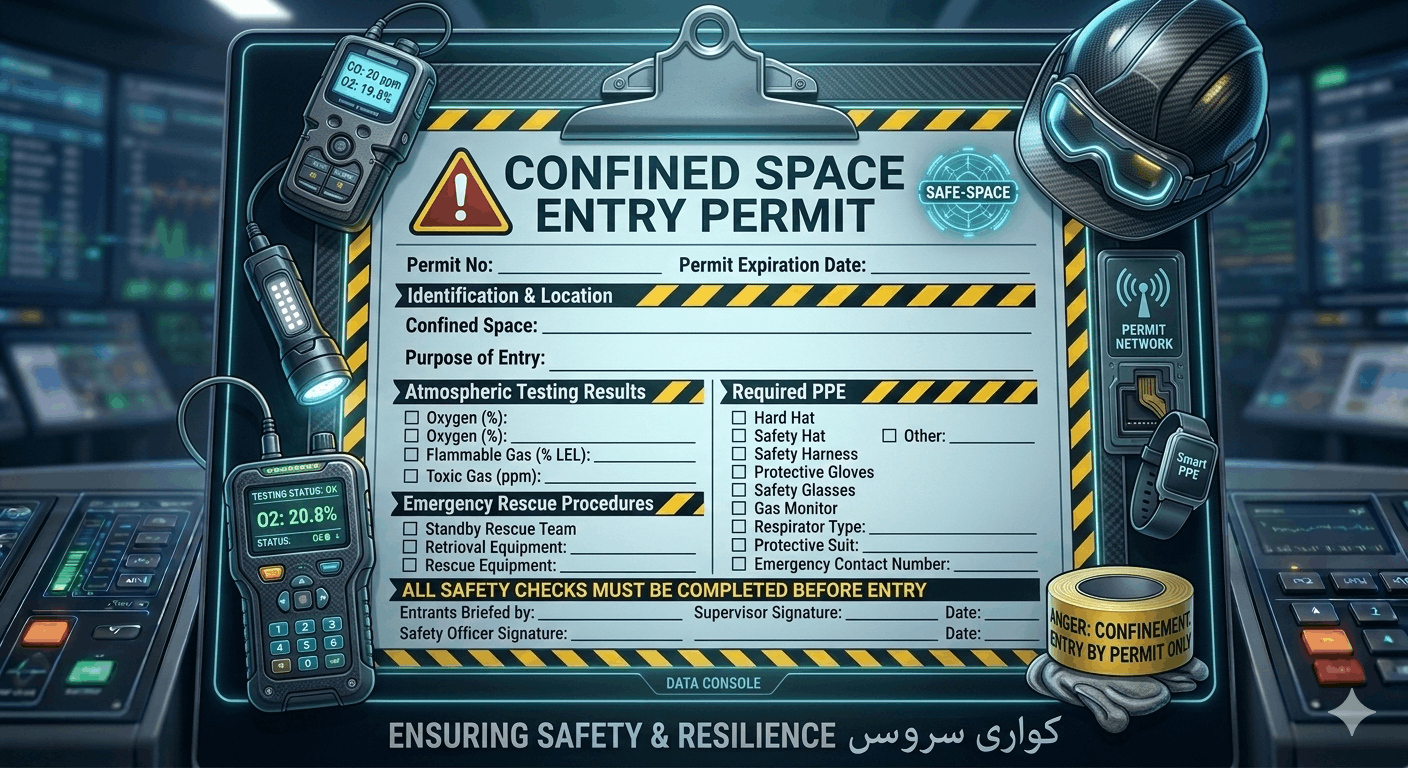
By implementing a structured permit system, organizations ensure that workers fully understand What is a Confined Space? and the precautions required before entry.
ایک منظم پرمٹ سسٹم نافذ کرنے سے، تنظیمیں یہ یقینی بناتی ہیں کہ کارکن پورے طور پر سمجھیں کہ کنفائنڈ اسپیس کیا ہے اور داخلے سے پہلے کن احتیاطی اقدامات کی ضرورت ہے۔
Hazards Found in Confined Spaces
Confined places are harmful because they concentrate risks that are uncommon in open work environments. These risks are classified into two categories: atmospheric and physical.
محدود جگہیں اس لیے خطرناک ہوتی ہیں کیونکہ ان میں ایسے خطرات جمع ہو جاتے ہیں جو کھلے کام کے ماحول میں عام طور پر موجود نہیں ہوتے۔ ان خطرات کو دو اقسام میں تقسیم کیا جاتا ہے: فضائی (Atmospheric) اور جسمانی (Physical) خطرات۔
1- Physical Hazards
Physical hazards in confined spaces are often easier to see but just as dangerous.
محدود جگہوں میں جسمانی خطرات اکثر نظر آ جاتے ہیں، لیکن یہ بھی اتنے ہی خطرناک ہوتے ہیں۔
1- Engulfment
- The risk of being buried by materials like grain, sand, liquids, or sewage.
- Even a few inches of material can trap a person and cause suffocation.
2. Mechanical Hazards
- Unguarded moving parts inside equipment (e.g., mixers, agitators, conveyors).
- Lockout/tagout procedures must be followed to isolate energy sources.
3. Electrical Hazards
Exposed wiring, wet conditions, or portable tools can cause electrocution.
4.Temperature Extremes
Hot environments can cause heat stroke; cold environments can cause hypothermia.
5. Noise and Vibration
High noise levels can damage hearing and make communication difficult.
6. Falling Objects
- Tools, debris, or materials dropped from above can injure workers below.
2- Atmospheric Hazards
Atmospheric hazards are the most dangerous because they are often invisible and can kill within seconds.
فضائی خطرات سب سے زیادہ خطرناک ہوتے ہیں کیونکہ یہ اکثر نظر نہیں آتے اور چند ہی سیکنڈ میں جان لیوا ثابت ہو سکتے ہیں۔
1. Oxygen Deficiency
- Normal air contains 20.9% oxygen.
- Levels below 19.5% are considered oxygen-deficient and can cause impaired thinking, unconsciousness, and death.
- Levels below 16% can cause rapid breathing, rapid heartbeat, and loss of coordination.
- Levels below 6% cause death within minutes.
2. Oxygen Enrichment
Above 23.5% oxygen, materials become highly flammable. Even a small spark can cause a massive fire.
3. Flammable Gases and Vapors
- Gases like methane, propane, hydrogen, and vapors from solvents can ignite if they accumulate.
- Flammable range is measured as a percentage of the Lower Explosive Limit (LEL).
4. Toxic Substances
- Hydrogen sulfide (H₂S) – smells like rotten eggs at low levels but quickly deadens the sense of smell. It is deadly at high levels.
- Carbon monoxide (CO) – colorless, odorless gas that binds with blood and prevents oxygen uptake.
- Solvent vapors, chlorine, ammonia, and other industrial chemicals.
5. Other Atmospheric Hazards
Dusts and particulates (e.g., grain dust, coal dust) that can cause respiratory issues or explosions.
Confined Space Safety Equipment (PPE and Tools)
Safety equipment is critical for keeping workers safe during confined space procedures.
Common equipment includes:
- Gas detection monitors
- Respiratory protection equipment
- Protective clothing
- Safety harnesses and lifelines
- Communication systems
- Explosion-proof lighting
Confined Space Rescue Plan
Rescue operations in tight areas are challenging, necessitating specialized equipment and skilled personnel. An appropriate rescue plan should include:
- Rescue equipment such as tripods and winches
- Trained rescue teams
- Communication systems
- Coordination with emergency services
ایمرجنسی حالات کے لیے تیاری کرنا ضروری ہے جب ایسے ماحول میں کام کیا جا رہا ہو۔